Behind the conyo culture
Post author
By Francesca Militar, Nathaniel Sierras
Post date
July 21, 2015
29 Commentson Behind the conyo culture
“It’s so init here, diba?” “Those shoes are so mahal talaga!” “Can you make para here, boss?”
Do you know anyone who talks like this?
De La Salle University always seems to be humorously associated with the conyo subculture, so one can’t help but wonder just how the typical conyo kid came into existence. The term can be used to describe a person, their language, or even the way they act or dress. As a language, some describe it as a form of Taglish, Taglish spoken in a “maarte” way, or sometimes just speaking in Filipino with a heavy foreign accent.
In spite of all this, though, does anyone really know what the exact definition of conyo is, where it started, and how it came to be?
To get a better look at the origins and evolution of the word, some students give their own ideas on what the term conyo means to them. The Menagerie takes it a step further by also talking to Dr. Ariane Macalinga Borlongan, a professor who teaches World Englishes and English Linguistics in Tokyo, Japan, and who also happens to be researching on conyo English.
A brief history
Those who have searched for the meaning of the word conyo may have come across the Spanish word coño, which refers to female genitalia. As pointed out by Dr. Borlongan, it can also be used as an interjection, much like the English word ‘fuck’. Evidently, this original meaning is very far from (and much more offensive than) the current Filipino meaning of the word.
So, when did people start habitually intertwining Filipino and English in every sentence, altering otherwise completely English statements by replacing verbs with their Filipino equivalents and inserting noh, diba, and eh, resulting in phrases like “making tusok-tusok the fishballs”?
According to Dr. Borlongan, it is unclear when exactly conyo English emerged, though he cites Br. Andrew Gonzalez’s idea that Philippine English started sometime during the American occupation, when Filipino teachers were starting to take the place of American teachers. From this, he hypothesizes that conyo English could have evolved from Philippine English sometime during the 1940s to 1950s when English had become everyone’s second language.
Despite having unclear origins at no specific point in history, the term conyo has since set its foundation in contemporary Filipino language, and it continues to be used by the youth of today. But there’s more to it than just being the result of Filipinos knowing two languages well. Today, being conyo isn’t just about speaking in a certain, peculiar way. Nowadays, there seems to be an image of a specific type of person that is associated with the word.
Conyo characterization
When students were asked about how they would define conyo, many of them seemed to have a common idea that it isn’t just a manner of speaking, but also a particular set of characteristics. Frequently given descriptions of a conyo person involved having expensive belongings like designer clothes, being conscious about their social status, being born into a rich family, and, most of all, being more fluent in English than the average Filipino.
The conyo culture is heavily associated with cafés, among other things.
The conyo culture is heavily associated with cafés, among other things.
Basically, the term is aimed towards the youth of the upper class, or, at least, those who want to be perceived as belonging to this social class. Because of this, Dr. Borlongan describes conyo English as a sociolect, a specific language used by a social group.
Speaking conyo may have little to do with how well a person can speak English or Filipino. It could simply be a language used by someone because they are among their friends of the same culture. It may not necessarily be because they are trying to put themselves above others, or because they lack the capability to speak Filipino, unlike what some students’ answers imply.
A conyo-tic future
Just like any other kind of language, dialect, or sociolect, the Filipino’s conyo English may still continue to evolve through time. “It is always possible to develop new words, new sociolects, new dialects, new languages — that is a normal process in language evolution”, Dr. Borlongan explains. Therefore, it is quite possible that the conyo English we know today may just be the initial foundation of what is to become a full-fledged language in the future. It is possible that we may be able to find a dictionary specifically-made for conyo English speakers or a council dedicated to forming new words for conyo English users. Its potential is as endless as the future.
Though some Filipinos may not necessarily favor the emergence of conyo English, Dr. Borlongan says this aspect of language evolution is what actually excites him as a linguist. “I am excited at how conyo English is emerging, evolving; hence, my research is on conyo English,” he enthuses.
Regardless of what the Filipino population says about it, conyo English is here to stay. It’ll continue to grow as society continues to develop, so watch out Filipinos, because conyos may gradually invade the country as we know it.
Author Archives: Jhon edelwies Ysug
How to store food in a fridge
gh Speed Training Topics
Search
Do You Know Which Fridge Shelves You Should Store Your Food On?
Louise Petty January 30, 2015
Clock Icon 3 min read
Knowing where in the fridge to store your food is a question that many people wish they knew the answer to. Refrigerating your food correctly is important to ensure that your food remains safe to eat and stop harmful bacteria spreading for raw to ready-to-eat foods. But what goes where?
How to Store Food in a Fridge:
(Please note that the diagram below was created for the purposes of a domestic fridge, with the bottom shelf being a vegetable drawer).
how to store food in a fridge diagram
Top and middle shelf
Ready-to-eat foods, such as dairy products, ready meals and packaged foods, leftovers, cooked meats and prepared salads. These should all be covered or kept in sealed containers to prevent contamination. Ready-to-eat foods are stored at the top of the fridge, away from raw foods so that harmful bacteria cannot transfer from the raw food to the cooked food.
Bottom shelf
Raw meat, poultry and fish in sealed containers to stop them touching or dripping onto other foods. Raw meats should always be stored at the bottom of your fridge to prevent cross-contamination. Ensure that each item is wrapped or in a sealed container so that it doesn’t come into contact with other foods.
Salad drawer
Fruit, vegetables and salad vegetables that have been washed prior to storage. Make sure that your fruit, vegetables and salad are wrapped in paper or plastic with air holes to keep them protected from any contamination. For salads and herbs, try wrapping them in a damp paper towel before storing to prevent them from drying out and to keep them fresher for longer.
Have you seen our latest report examining regional standards of food hygiene across the UK? Check out our interactive map and discover how hygienic your hometown really is in Food Hygiene: Know the Score.
Food Hygiene Tips for Your Fridge
Remember that your fridge should be set at a temperature between 0-5°c so that the rate of food spoilage is slowed and harmful bacteria cannot multiply. At this temperature, your food will be kept safe to eat.
Also remember to keep an eye on use-by dates. Any food that has passed its use-by date should not be eaten as harmful bacteria has had chance to grow and make the food dangerous to health. Foods past their best-before dates can be eaten as this is only a mark of quality, not safety.
Thinking of selling your homemade produce? Look no further than our Starting a Food Business From Home guide.
General Rules of Refrigeration
Make sure that the refrigerator is never overloaded. Whilst cramming that last piece of food into the fridge may seem a good idea at the time, you are in danger of blocking the cooling unit that will chill your food. There is also a danger that the fridge door could not be properly shut, leaving you food that is unfit to eat the following morning! Air needs to be able to circulate around the food.
New stock should always be placed behind old stock. Yes, the rules in a commercial kitchen should apply at home as well. Ensure you eat the food in the fridge based on the use by date in order to prevent food wastage which ultimately hits your wallet!
Open cans should never be stored in the refrigerator as this may result in chemical contamination, especially acidic food such as fruit and tomatoes. If you wish to put canned food in the fridge, ensure that you put the food into a container that is suitable for chilling first.
If your fridge temperatures are too high, it may be the result of overloading, the blocking of cooling units, or the thermostat being set too high. If your fridge does not have a thermometer built in, we recommend that you purchase a fridge thermometer to monitor the temperature. Remember that the correct temperature is- 0-5°c.
Responsible for a commercial refrigerator? Our Level 3 Food Safety Course is a comprehensive overview of everything required to manage food hygiene in your business.
Further Food Hygiene Resources
How to Defrost Food Safely
How Long Can You Store Frozen Food For?
Can I Cook This From Frozen?
Level 1 Food Hygiene and Safety Certificate
Tags:
Food Safety
Like This Article?
Share it on social.
Share on Facebook
Share on Twitter
Share on linkedIn
POST AUTHOR
Louise Petty
Louise Petty
Louise has been writing for the Hub since its creation and has produced articles on a wide range of topics. Louise prefers not to specialise in one particular area, so has written about everything from asbestos and COSHH, through to food safety, safeguarding issues and business skills

How to store food in a fridge
Animal rescue law
Republic Act No. 8485 February 11, 1998
AN ACT TO PROMOTE ANIMAL WELFARE IN THE PHILIPPINES, OTHERWISE KNOWN AS “THE ANIMAL WELFARE ACT OF 1998”
Be it enacted by the Senate and House of Representatives of the Philippines in Congress assembled:
Section 1. It is the purpose of this Act to protect and promote the welfare of all animals in the Philippines by supervising and regulating the establishment and operations of all facilities utilized for breeding, maintaining, keeping, treating or training of all animals either as objects of trade or as household pets. For purposes of this Act, pet animal shall include birds.
Section 2. No person, association, partnership, corporation, cooperative or any government agency or instrumentality including slaughter houses shall establish, maintain and operate any pet shop, kennel, veterinary clinic, veterinary hospital, stockyard, corral, stud farm or stock farm or zoo for the breeding, treatment, sale or trading, or training of animals without first securing from the Bureau of Animal Industry a certificate of registration therefor.
The certificate shall be issued upon proof that the facilities of such establishment for animals are adequate, clean and sanitary and will not be used for, nor cause pain and/or suffering to the animals. The certificate shall be valid for a period of one (1) year unless earlier cancelled for just cause before the expiration of its term by the Director of the Bureau of Animal Industry and may be renewed from year to year upon compliance with the conditions imposed hereunder. The Bureau shall charge reasonable fees for the issuance or renewal of such certificate.
The condition that such facilities be adequate, clean and sanitary, and that they will not be used for nor cause pain and/or suffering to the animals is a continuing requirement for the operation of these establishments. The Bureau may revoke or cancel such certificate of registration for failure to observe these conditions and other just causes.
Section 3. The Director of the Bureau of Animal Industry shall supervise and regulate the establishment, operation and maintenance of pet shops, kennels, veterinary clinics, veterinary hospitals, stockyards, corrals, stud farms and zoos and any other form or structure for the confinement of animals where they are bred, treated, maintained, or kept either for sale or trade or for training as well as the transport of such animals in any form of public or private transportation facility in order to provide maximum comfort while in transit and minimize, if not totally eradicate, incidence of sickness and death and prevent any cruelty from being inflicted upon the animals.
The Director may call upon any government agency for assistance consistent with its powers, duties, and responsibilities for the purpose of ensuring the effective and efficient implementation of this Act and the rules and regulations promulgated thereunder.
It shall be the duty of such government agency to assist said Director when called upon for assistance using any available fund in its budget for the purpose.
Section 4. It shall be the duty of any owner or operator of any land, air or water public utility transporting pet, wildlife and all other animals to provide in all cases adequate, clean and sanitary facilities for the safe conveyance and delivery thereof to their consignee at the place of consignment. They shall provide sufficient food and water for such animals while in transit for more than twelve (12) hours or whenever necessary.
No public utility shall transport any such animal without a written permit from the Director of the Bureau of Animal Industry or his/her authorized representative. No cruel confinement or restraint shall be made on such animals while being transported.
Any form of cruelty shall be penalized even if the transporter has obtained a permit from the Bureau of Animal Industry. Cruelty in transporting includes overcrowding, placing of animals in the trunks or under the hood trunks of the vehicles.
Section 5. There is hereby created a Committee on Animal Welfare attached to the Department of Agriculture which shall, subject to the approval of the Secretary of the Department of Agriculture, issue the necessary rules and regulations for the strict implementation of the provisions of this Act, including the setting of safety and sanitary standards, within thirty (30) calendar days following its approval. Such guidelines shall be reviewed by the Committee every three (3) years from its implementation or whenever necessary.
The Committee shall be composed of the official representatives of the following:
(1) The Department of Interior and Local Government (DILG);
(2) Department of Education, Culture and Sports (DECS);
(3) Bureau of Animal Industry (BAI) of the Department of Agriculture (DA);
(4) Protected Areas and Wildlife Bureau (PAWB) of the Department of Environment and Natural Resources (DENR);
(5) National Meat Inspection Commission (NMIC) of the DA;
(6) Agriculture Training Institute (ATI) of the DA;
(7) Philippine Veterinary Medical Association (PVMA);
(8) Veterinary Practitioners Association of the Philippines (VPAP);
(9) Philippine Animal Hospital Association of the Philippines (PAHA);
(10) Philippine Animal Welfare Society (PAWS);
(11) Philippine Society for the Prevention of Cruelty to Animals (PSPCA);
(12) Philippine Society of Swine Practitioners (PSSP);
(13) Philippine College of Canine Practitioners (PCCP); and
(14) Philippine Society of Animal Science (PSAS).
The Committee shall be chaired by a representative coming from the private sector and shall have two (2) vice-chairpersons composed of the representative of the BAI and another from the private sector.
The Committee shall meet quarterly or as often as the need arises. The Committee members shall not receive any compensation but may receive reasonable honoraria from time to time.
Section 6. It shall be unlawful for any person to torture any animal, to neglect to provide adequate care, sustenance or shelter, or maltreat any animal or to subject any dog or horse to dogfights or horsefights, kill or cause or procure to be tortured or deprived of adequate care, sustenance or shelter, or maltreat or use the same in research or experiments not expressly authorized by the Committee on Animal Welfare.
The killing of any animal other than cattle pigs, goats, sheep, poultry, rabbits, carabaos, horses, deer and crocodiles is likewise hereby declared unlawful except in the following instances:
(1) When it is done as part of the religious rituals of an established religion or sect or a ritual required by tribal or ethnic custom of indigenous cultural communities; however, leaders shall keep records in cooperation with the Committee on Animal Welfare;
(2) When the pet animal is afflicted with an incurable communicable disease as determined and certified by a duly licensed veterinarian;
(3) When the killing is deemed necessary to put an end to the misery suffered by the animal as determined and certified by a duly licensed veterinarian;
(4) When it is done to prevent an imminent danger to the life or limb of a human being;
(5) When done for the purpose of animal population control;
(6) When the animal is killed after it has been used in authorized research or experiments; and
(7) Any other ground analogous to the foregoing as determined and certified licensed veterinarian.
In all the above mentioned cases, including those of cattle, pigs, goats, sheep, poultry, rabbits, carabaos, horses, deer and crocodiles the killing of the animals shall be done through humane procedures at all times.
For this purpose, humane procedures shall mean the use of the most scientific methods available as may be determined and approved by the committee.
Only those procedures approved by the Committee shall be used in the killing of animals.
Section 7. It shall be the duty of every person to protect the natural habitat of the wildlife. The destruction of said habitat shall be considered as a form of cruelty to animals and its preservation is a way of protecting the animals.
Section 8. Any person who violates any of the provisions of this Act shall, upon conviction by final judgment, be punished by imprisonment of not less than six (6) months nor more than two (2) years or a fine of not less than One thousand pesos (P1,000.00) nor more than Five thousand pesos (P5,000.00) or both at the discretion of the Court. If the violation is committed by a juridical person, the officer responsible therefor shall serve the imprisonment when imposed. If the violation is committed by an alien, he or she shall be immediately deported after service of sentence without any further proceedings.
Section 9. All laws, acts, decrees, executive orders, rules and regulations inconsistent with the provisions of this Act are hereby repealed or modified accordingly.
Section 10. This Act shall take effect fifteen (15) days after its publication in at least two (2) newspapers of general circulation.
Approved: February 11, 1998
The Lawphil Project – Arellano Law Foundation
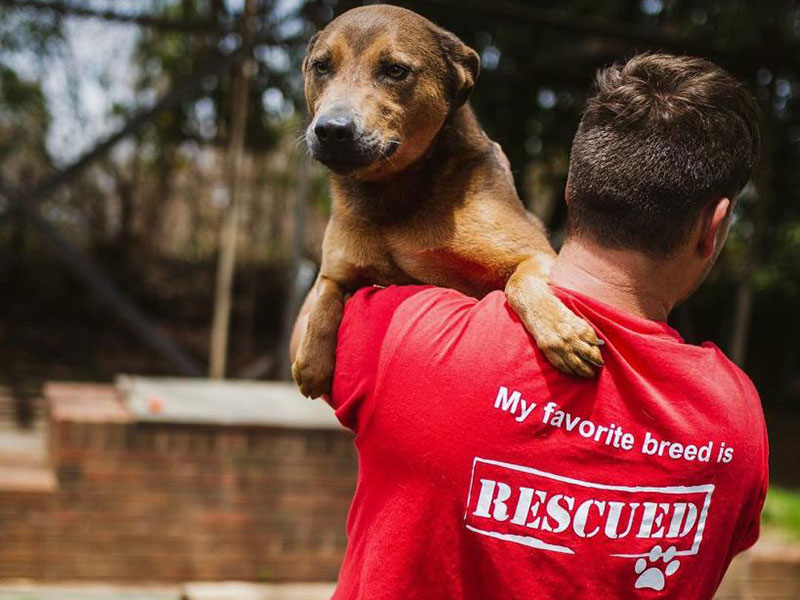
Animal rescue law
 Site Title